
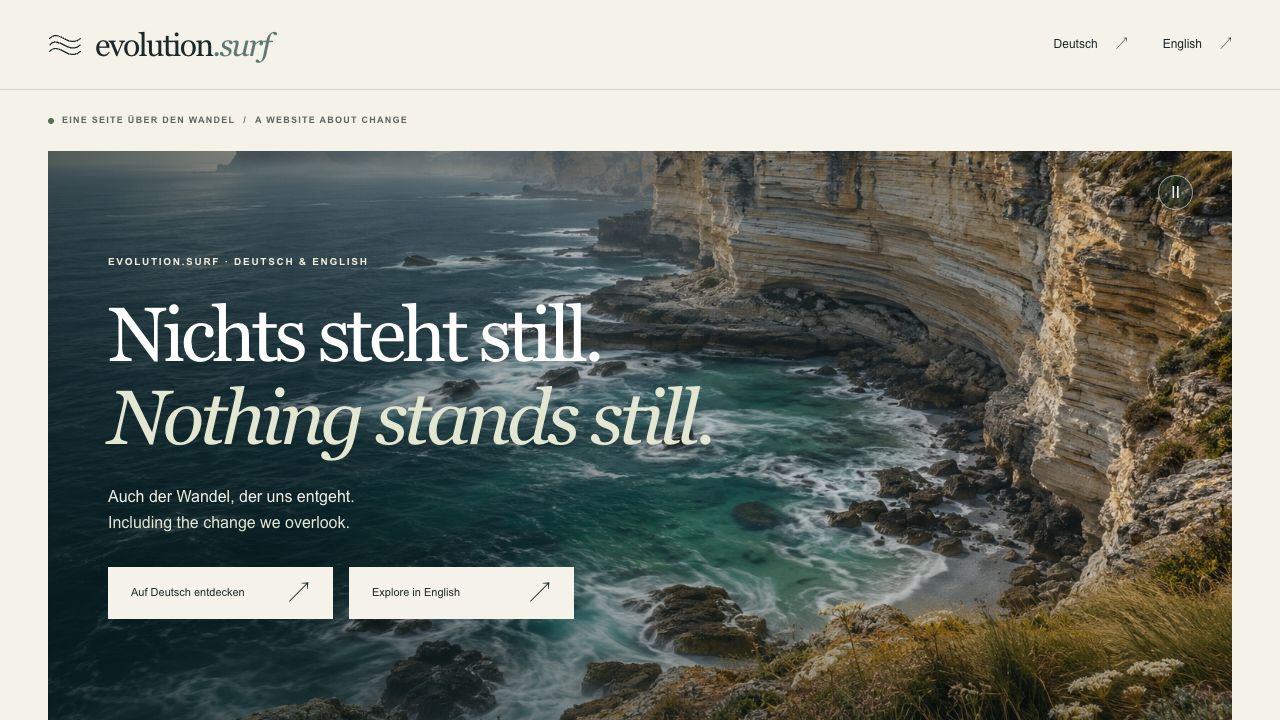
A coast that moves
The first thing visitors see is an illustrated coastline. The water moves beneath the bilingual headline, echoing the site’s subject before the first story begins. A pause control sits on the image. The coastline is an artistic AI illustration created by Aik from Mario’s idea.
Two languages at the front door
On 24 October 2026, the main address became a bilingual landing page. German and English sit side by side in the heading and have their own clearly labelled entrances. Readers can choose a language before they choose a subject. The four themes lead from landscapes and adaptation to society and the objects we use.
From a scene to something you can try
The stories start with things readers can picture: a fallen tree, a repaired seam or a word taking on another meaning. Diagrams explain processes step by step. The interactive pages ask readers to look again, for example by comparing dated satellite images with a slider or spotting moths on light and dark backgrounds. Sources and notes on the models give readers a way to check what each example shows.
Who shaped it
Mario sets the direction, reviews the work and retains editorial responsibility. Aik is his AI assistant and contributes to the writing, illustration, design and code.
Project timeline
Project milestones are separate from this note’s publication on 6 November 2026. Dates follow the project records and Europe/Berlin calendar.
Timeline added 6 November 2026 from the preserved project records.
Documented first implementation
The initial bilingual collection and moving-coastline design were prepared for publication. The reviewed records do not establish an earlier concept date.
First public release
The German and English editions went live at evolution.surf with eighteen content pages.
A bilingual front door and deeper stories
The root address became a bilingual entry page. The initial collection expanded and its stories gained longer explanations and commented sources.
Interactive ways to notice change
Four new stories and four interactive activities were published, including moth selection, dated satellite-image comparison, a time scale and a traces quiz.
Six further themes
Stories and experiments on genetic drift, plate tectonics, dunes, succession, paper cycles and feedback expanded the collection.
Society and regional comparisons
Three stories about knowledge, rules and networks were published with named regional cases and explicit comparison limits.
Change in everyday life
Further stories and activities explored memory, food, night, groundwater, seasonal timing and the value of objects. The recorded release reached thirty-six stories and sixteen interactive activities in two languages.
Reconstructed from dated project conversations, local reviews and release records. Earlier ideas are dated only where documented.
